Showing posts with label Palm Trees. Show all posts

Sunday, June 27, 2010

Tropical Plants and Landscaping: How to Grow a Palm Tree from a Coconut.

This article shows how to take a coconut, and grow it into a tropical palm tree.

Nothing shouts tropics, quit like the coconut palm.
It's inexpensive and easy to do. A very fun project.
A coconut is after all, just a large seed.


OVERVIEW
Coconut's fall from the tree when they are rip and ready to plant. So choose a ripe one for planting.
In a container and grown indoors a palm will last a little over 5 years. Planted outdoors coconut palms will survive for many many years in a rich well draining soil. 

PROCEDURE:
1.  Prepare soil for potting, Palms like moist, but well draining soil.
We use a soil mixture as follows:
   • 60% Black Soil
   • 20% Beach Sand
   • 10% Peat Moss
   • 10% Perlite

GREEN / TAN HUSK (Best Method)
These are the best for growing coconuts.
They have the outer casing still attached.
They should look like they dropped right from the tree.
You must hear milk inside if you shake it.
It should be free from rot or mold.

  1. Soak the coconut in a bucket of water for 3-4 days.
  2. Get a pot at least 2-3 inches larger than the coconut.
  3. Use the soil mixture listed above.
  4. Plant the coconut pointy side down. 
  5. Plant the coconut 2/3 into the soil.
  6. Leave 1/3 of the coconut above the ground.
  7. Water often enough to keep moist, but not damp.
  8. Keep the temperature at about 72 degrees, 80 is the best, and should never dip below 65.
  9. Your coconut will sprout anywhere from 1-7 months. (faster with warmer soil)

Grow a Coconut Palm Tree: Coconut Palm Sprouting.

[sprout a coconut] [coconut palm] [grow a coconut] 

Friday, July 3, 2009

Cold Hardy Palm Trees For Landscape Design And Planting In The United States

Cold Hardy Palm Trees For Landscape Design And Planting In The United States

Author: Pat Malcolm

Scattered reports of palm trees growing in Northern areas of the United States and Canada have been known for many years. Semi-truck loads of windmill palm trees have been unloaded and successfully grown in Canada and the Northeast beginning in the year 2000. These windmill palm trees, Trachycarpus fortunei, provide many resorts and homeowners with a tropical look for their pools or patios. Needle palms, although very rare and available only in short supply, tolerate below zero temperatures of the north. Dwarf palmetto palm trees, Sabal minor, and Dwarf saw palmetto palm trees, Serenoa repens, demonstrate cold hardy qualities and are especially desirable as hedges, borders, and as a privacy block.


Windmill Palm Trees – Trachycarpus fortunei


The most cold hardy palm tree is the windmill palm tree, Trachycarpus fortunei, a palm tree that is found growing as far north as Canada. The cold hardy quality is especially historically notable of the windmill palm trees, where the trees are lined around Lake Lucerne, Switzerland leading up to the city walls. Extensive plantings of windmill palm trees, Trachycarpus fortunei have been known for years in southern resort areas such as the Cloister at Sea Island, Georgia, where the entrance to the hotel greets guests with thin, graceful trunks of windmill palms. Tall windmill palm trees also can be seen at the Retreat Plantation Golf Course on St. Simons Island, Georgia at the club house entrance. TyTy Nursery began selling windmill palm trees a decade ago as small trees and recently have successfully transported large windmill palm trees by semi-trucks for planting in such northern cold states as Michigan, Illinois, Minnesota, New York, Pennsylvania, New Jersey, and many others. These large windmill palm trees appear to have survived temperatures of below zero and heavy snow and ice storms. It is now possible for Northern states to plant with a tropical garden look around their pool or patio. Windmill palm trees have a great future in the United States as an outstanding tree with a tropical exotic appearance, and a palm tree that survives severe cold temperatures and snows of the north.


Needle Palm Trees - Rhapidophyllum hystrix


Many palm trees have been tested for their quality of cold hardy survival, and the needle palm, Rhapidophyllum histrix, rates high on the list. The needle palm tree was tested years ago at the Brooklyn, New York, Botanical Gardens, and the palm was found to grow well and remain green after snow and ice storms fell during the winter. One quality that the needle palm tree features is slow growth that produces waxy leaf coverings that protect the growing tissue from fast freezing temperatures. The needle palm tree, Rhapidophyllum histrix, produces long needle projections at the base of each palm leaf. This needle is stiff and ominous to man and beast and is responsible for the descriptive name: needle palm tree. The needle palm tree tends to grow in clumps, producing small offset needle palm trees at the base, however, seeds are commonly produced which are scattered around the base of the needle palm tree. The seed of the needle palm tree sprout slowly to grow into small plants. Large needle palm trees can grow for hundreds of years in age, but are rarely found as a native palm tree in forests, because collectors have dug them for landscapes. Even though some needle palm trees have been documented to be 15 feet tall, the trees are rare and expensive in large mature sizes.


Dwarf palmetto palm tree - Sabal minor


In the south, the dwarf palmetto palm tree is commonly found growing as small shrubs and colonies along sandy coastal areas and in poor swampy soils inland. The dwarf palmetto palm, Sabal minor, competes aggressively with other shrubs and trees in native American forests and is a valuable landscape shrub in many exclusive resort areas, because once established, it is evergreen and requires virtually no maintenance in landscapes. Many gardeners have unfortunately tried to dig dwarf palmetto palm trees to transplant and grow in their yards, but because of the extensive root system that is removed, most transplanted dwarf palmetto palm trees wither and die shortly after planting. Good results of planting dwarf palmetto palm trees can be experienced, if the gardener decides to buy nursery container trees. Striking specimens of dwarf palmetto palm trees can be seen when clumps of small trees are removed from the mother plant, that often contains a curved shapely trunk of 4-5 feet topped by beautiful green leaves.


Dwarf Saw Palmetto Palm Tree – Serenoa repens


High demand from the landscaping nursery industry has stressed the supply and availability of the Saw Palmetto Palm tree, "Serenoa repens". This palm tree grows as a silver form and a green form. It illuminates the dark backgrounds under dense shade. This dwarf palm tree forms clumps and often is used as border hedges and screens. Saw Palmetto palm trees are not fast growing but are evergreen and cold hardy in many Northern areas of the United States, where snow and ice damage most green plants. Cold hardy palm trees are a valuable landscape tree in cold areas where a tropical look, around pools and patios are useful. Recent tree plantings of the Dwarf Saw Palmetto palm trees at golf courses have stressed the supply of these plants. As a native plant discovered by William and John Bartram in 1773, on St. Simon's Island, GA near Fort Frederica, the Dwarf Saw Palmetto palm tree was discovered growing and was identified by Bartram as "spinosis " (Dwarf Saw Palmetto). He also found "Corpha palma", or Great Cabbage Palm, "Corpha pumila", "Corpha repens" and "Corpha obliqua".


About the Author:
Visit TyTy Nursery to purchase the trees mentioned in this article, or many others that you may be looking for!Article Source: ArticlesBase.com - Cold Hardy Palm Trees For Landscape Design And Planting In The United States

[palm trees] [cold hardy palms] [palms for cool climates] [tropical landscape] [tropical garden] [tropical plants]

Northern Cold Hardy Palm Trees for your tropical landscape or tropical garden.

OVERVIEW: Good summery of palms that do well in cold climates. 

Cold Hardy Palm Trees For Northern Garden Planting.   Author: Pat Malcolm

Palm trees were once thought to be suitable for planting only in tropical landscapes, however, several cold hardy palm trees occur naturally, growing in America, where snows fall during winter. The windmill palm tree, Trachycarpus fortunei; the Dwarf Palmetto palm tree, Sabal minor; the Saw palmetto, Serenoa repens; and the Sabal Palm, sabal palmetto; and the Needle Palm, Rhapidophyllun hystrix; Much of the information that is published in book from, magazine articles and Internet websites is extremely conservative, perhaps because the testing for national cold hardiness is of a recent origin; and also temperature fluctuations caused by global warming increases the survival rate of palm tree plantings in recent years. Try buying a few palm trees in your garden to plant and grow. Very large specimen palm trees can be purchased for semi-truck fast delivery at a few Internet nursery websites.


The Windmill palm tree, Trachycarpus fortunei, also is called a Chusan palm and a Chinese Windmill palm tree, was imported from Japan, perhaps first, into the United States, but most botanists believe that this palm tree originated in China, where many seed and specimen trees were purchased to import into the US. Windmill palm trees are a common landscape sight throughout Europe, the United States, and Canada. These Windmill palm trees are very cold hardy, and can be see flourishing along the city streets of Lake Lucerne, Switzerland, where the palms grow up to 40ft in height. The slender, graceful trunks are covered with brown-black fibers that appear as hair from a distance, and with aging, the fibers turn gray, and on large old trees the fibers fall off to reveal a slick beautiful trunk. The waxy leaves are bright green above and silver-green below; growing 2 feet long and 2 feet wide, smaller than most other palm trees. Windmill palm trees grow a flower stalk 2 feet long, with yellow, pleasantly aromatic flowers developing into ½" long blue fruits.

Windmill palm trees, Trachycarpus fortunei, are so cold hardy that semi-truck loads of large specimen sized trees have been nursery distributed for customers in Canada who wish to buy a palm to place in a tropical landscape design. The famous Cloister Hotel at Sea Island, Georgia plants grouping of large Windmill palms, some 20-30 feet for planting near entrances and landscape positions close to buildings. Windmill palms are tolerant of salt water spray and are very adaptable for planting and growing in most areas of the United States.


The Dwarf Palmetto palm tree, Sabal minor, is not a fast growing plant, and gorws abundantly in pine tree forests, and in poorly drained lowlands. Innumerable colonies of dwarf palmetto palm grow next to the highway between Albany, Georgia and Blakely, Georgia on swampland, that is under water periodically, and the dwarf palmetto palms grow in very heavy shade. Native to the Southeastern US, this palm grows small trunks that remain hidden behind the leaves. The flower stalk grows four to six feet, and white flowers grow into one-half inch, black fruit. This extremely adaptable palm tree is drought tolerant, and popularly is grown as a native, landscape specimen shrub or in rows as a privacy screen. This dwarf palmetto grows beautiful, pest resistant leaves, and can be seen growing as a salt water resistant plant in large landscape borders of Sea Island, Georgia, where land purchasers value the natural appearance and incorporate the plant into landscape designs.


Saw palmetto, Serenoa repens, is one of the native Southeastern plants that has become the rage for planting as a cold hardy palm in Northern States, where it can survive temperatures of -10 F. The beautiful blue or green colored leaves are shiny and waxy, growing about five feet long. The flower stalk grows 3 feet long and appears in the heat of the summer, covered with white flowers that form blue fruit one inch in diameter. The saw palmetto palm tree is very adaptable for cold hardy growing in Northerne states, where temperature extremes damage most other palms. These palm trees are grown mostly as clumping shrubs in naturalistic landscapes. You should buy large Saw palmetto palms, as they do not transplant well and should be planted and grown from a container plant nursery. Very exotic trunks form on century old Saw palmetto palms, that can be seen growing on the sand dunes next to salt water waves spraying the leaves at Sea Island, Georgia. Trunks on these trees had the lower leaves removed to reveal trunks 4ft long that can grow parallel to the ground or at right angels or twisted. All palm tree trunks obviously shaped by storms or hurricanes, that may have blown over the plants rooted in the sand, only to regrow at a different angle. These palm trees must be seen to appreciate a dune of sand landscaped properly.


The Cabbage palm tree (Sabal palmetto) is also called the Sabal Palm, and is believed to be the most commonly planted palm tree in the Southern US. This palm tree is native to that area, and grows in forests throughout Florida and coastal Georgia. The Cabbage palm tree can grow to 40 feet, but only grows about one foot per year. Upon aging, the lower leaf stem remains (petioles) attached for many years, giving the trunk a bazaar, forbidding appearance. After many years, the leaf remains can be removed artificially, or naturally, giving the trunk a slick, desirable look in the landscape. During hot weather, white flowers grow fast, to 6 feet long, to produce one-half inch black fruit that fall to the ground. Sabal palm trees grow as far North as coastal Virginia, and Carolina landscapes, and are cold hardy to below zero temperatures. This Cabbage palm is drought resistant, requires little care or growth maintenance when planted in the landscape, and is so salt water tolerant, it can be found growing along the sea coast, sometimes falling into the ocean with sea erosion.


Sabal palm trees are considered as the State tree in Florida and South Carolina. Because Sable palm tree roots do not branch like other palms, transplanting the tree can be difficult unless the leaves are all removed before transplanting into home landscapes, and since they are not fast growing, it is not unusual for the palm tree to require 3 to 4 years to regrow the canopy leaves to normal size. The cabbage palm is also susceptible to hurricane damage, because its roots are not largely branched like other palm trees to anchor the trunk into the earth.


The Needle Palm, Rhapidoe phyllum histrix, is native to the Southeastern United States, and is considered to be one of the most cold hardy palm trees growing in the United States. Buyers find it difficult to purchase this palm tree, because it has been removed from most of the forests, where it is not a fast growing palm tree. Large trunks up to 4 feet tall are rare, and very expensive, costing each thousands of dollars. But, this needle palm has survived minus 10 degrees F at the Brooklyn Botanical Garden in New York for many years, unaffected by the snow and cold temperatures. The leaves are two feet long and 4 feet wide, and the trunk is dangerously armed with white, sharp, 5 inch needles, easily being detached from the trunk, with the overall appearance like that of a porcupine. Even though the needle palm trees hundred of years old are expensive, it is possible to buy smaller plants at reasonable prices for fast shipment at many Internet nursery websites.


About the Author:

Patrick A. Malcolm, owner of TyTy Nursery, has an M.S. degree in Biochemistry and has cultivated palm trees for over three decades.

Article Source: ArticlesBase.com - Cold Hardy Palm Trees For Northern Garden Planting

[cold hardy palms] [palms for cold climates] [palm trees] [tropical garden] [tropical trees] [tropical landscaping]

Tropical Landscaping Article: Cold Hardy Tropical Plam Tree.

Overview:  This article is about growing cold hardy plam trees for you tropical landscape.

Cold Hardy Palm Trees For Landscapes In Southern States - Zones 8-11

Author: Pat Malcolm

In Southern States, the Northern type palm trees that withstand cold temperatures of -20* F will also thrive in the South. The Northern type palm trees, such as Windmill Palm trees, Trachycarpus fortunei, Needle Palm trees, Rhapidophyllum hystrix, Dwarf palmetto palm tree, Sabal minor, and Dwarf Saw Palmetto palm trees, Serenoa repens, are discussed in another article by the same author called "Cold Hardy Palm Trees for Landscape Design and Planting in the United States." Other palm trees that are abundantly planted and grown in the Southern States are the Washingtonia (Washington) Fan Palm Tree, Washingtonia robusa, the Pindo (Jelly) Palm Tree, Butia capitata 'Pindo,' the Sago Palm Tree, Cycas revoluta, the Chinese Fan Palm Tree, Livistonia chinensis, and the European Fan Palm Tree (Mediterranean Fan Palm Tree), Chamaerops humilis. This latter list of Southern States, adapted palm trees can be found planted and growing extensively throughout the South, principally because their growth rate is faster than the Northern States' list of cold hardy palm trees, and the cost is considerably less for large established specimens that offer a fast fix for the tropical look.


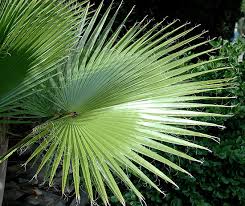
Washingtonia (Washington) Fan Palm, Washingtonia robusta, also known as the Mexican Fan Palm Tree, the Washingtonia (Washington) Fan Palm tree has been planted to grow in landscapes throughout the Southern United States. The Washingtonia Fan palm tree is a favorite tree for planting near motels, because it grows fast. Washington Fan palm trees also are lined along interstate highways and at metropolitan boulevard parks. The imposing height of this palm tree can grow 100 feet tall in Mexico where it is native. The Washingtonia (Washington) Fan Palm tree is the fastest growing of the cold hardy palm trees in America. TyTy Nursery offers various sizes of Washingtonia palm trees for the gardener to buy.

Pindo (Jelly) Palm Tree – Butia capitata ‘Pindo'


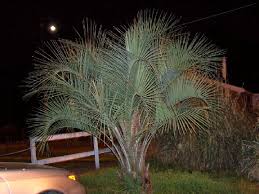
The distinctive look of the Pindo palm tree, Butia capitata ‘Pindo' is unforgettable. Pindo palm trees are tolerant of salt water spray and can be found growing up and down coastal areas from Virginia to South Florida, Zones 8-10. The leaf color of the Pindo palm tree is blue-green, growing up to 6 ft. long, but the actual palm tree rarely grows taller than fifteen feet tall. The large orange fruit is tasty and in the South is used to make jelly, tasting like banana-pineapple. The Pindo palm tree survived the severe zero degree temperatures in the historical 1983 deep freeze in the South.


Sago Palm Tree – Cycas revoluta


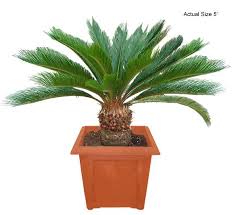
In Sicily, Italy, Sago palm trees grow to fifteen feet tall, but only after decades of growth. This palm tree, known as the Sago palm and is perhaps the most widely marketed palm tree, because of its easy maintenance requirements and livability. The Sago palm is commonly used as a container tree at restaurants and cafes. Sago palm trees are moderately cold hardy and this palm survived the zero temperatures in the winter of 1983. The Sago palm tree is a popular container palm tree to be placed in pairs at door entrances, Zones 8-11.


Chinese Fan Palm Tree – Livistonia chinensis


Even though the growth rate of the Chinese Fan palm tree is slow it can grow 25 ft. tall. The huge leaves are beautiful and arch upwards on the Chinese Fan Palm tree. The Chinese Fan palm tree is widely grown and adaptable in Zones 9-11. The Chinese Fan Palm tree, Livistonia chinensis, is commonly planted and grown as a landscape specimen.

European Fan Palm Tree (Mediterranean Fan Palm Tree) – Chamaerops humilis


A native palm tree to the Mediterranean region, the European Fan Palm, Chamaerops humilis can be seen growing extensively in Europe growing as clumps of outside specimen trees or potted in large containers useful as decorative trees outside restaurants and cafes at such cities as Paris, Rome and Athens. When stripped of offset palms the European Fan palm forms a very graceful plant solitary in landscapes, looking similar to the Windmill Palm tree, Trachycarpus fortunei, both with tall slender trunks and small fan shaped leaves. European Fan palm tree clumps are extensively used at the Cloister Hotel at Sea Island, GA as specimen clusters in the landscape design. They are cold hardy in Zones 8-11.

About the Author:

Buy the trees mentioned in this articles, as well as many others, from the authors website! TyTy Nursery Article Source

: ArticlesBase.com - Cold Hardy Palm Trees For Landscapes In Southern States - Zones 8-11


[palm tree] [cold hardy palm trees] [tropical plants] [exotic plants] [tropical landscaping] [sago palm] [fan palm] [chinese fan palm] [growing palm trees]